Featured

Welcome!

Hey! Welcome to JJ’s Outlook, a blog where you’ll find all my content and political commentary online. While I write for this blog, I also write for several publications, including The Spectator Australia and The Good Sauce. I post links to my articles in those publications here as well. If you like what you read, feel free to give it a like, or leave a comment to let me know what you think. You can also subscribe via email to the blog if you’d like to get email notifications when new posts go live.

Enjoy your visit!

The Thoughts of an Overthinker

We all think. We all have thoughts. To think is to be human. We are all thinkers in some way. Sometimes we think deeply. Sometimes the thoughts we have are surface level. But each time we think, we bring something to life in our mind – an idea, a thought, a memory. Those thoughts can be passing, or we can keep them around. But regardless of what we do, we are going to have thoughts, because that is part of the human condition.

While we can have pleasant thoughts, and while we can think rationally and deeply about things, about parts of life, about how the world works, about the way in which we as human beings live, we also have the capacity to have thoughts which are not so fun to deal with, thoughts that can either hit us like a tonne of bricks or creep up slowly and hit us before we even know they are there – either way they may occur, they affect us deeply. They can be intrusive, drawing in our attention, our focus, towards them, feeding us an idea that we slowly start to believe and struggle to get away from. But that idea is not real. It is a lie that is planted in our minds like a seed, and each time we give it thought it is as if we are watering it, allowing it to grow until it blossoms in all its ugliness and begins to tear us apart. But it can be so difficult to uproot that seed, to tear it out of our mind and discard it. And it begins to shape how we see things, how we see people, how we see parts of our life, how we see the things which matter most to us, the people who matter most to us, the parts of our life that matter most to us. And it gives us a false idea of reality.

The thing about thinking is that we do it so much that it becomes second nature to us. Sometimes we don’t even really think about it – we just think because that is what we as humans do. But some of us think too much. We become obsessed with and overwhelmed by thoughts. The thoughts keep coming and our minds race. And we cannot stop it. We cannot stop thinking, even if it is becoming overwhelming and tearing us up inside and making us all anxious or depressed. The thoughts paralyse us. They hold us in place while they build and whirl around inside our heads. They do not even give us a second to escape. It’s like being in a car and losing control of the vehicle and all you can do is just sit there in place and hold on for the ride and hope you get through it, and hope that things right themselves. 

The thing about overthinkers is that we care. We genuinely care. A lot. We care a lot about the people we care about. We have big hearts and we care so much so that we do all we can to make sure the people we care about are okay. We are there for them no matter what – whenever, wherever, however. We are ready to be there for them in their joyful moments, in all that they achieve. And we are also ready to help them bear their burdens, to carry the weight of their struggles, their pain, their suffering, even when we are shouldering our own. Because that’s who we are.

And so we think – a lot. Because we want to make sure we don’t do anything wrong, that we don’t say anything wrong, that we don’t cause any harm to the people we care about. We sometimes overanalyse conversations, messages, interactions that we have with the people we care about. We start to think that we might have upset them, or that we might have done something to cause them to see us differently, to change their perception of us in a not so great way. We think of every possible scenario and our minds tend to focus on the worst-case scenario – we catastrophise. Why? Because in some way we are trying to protect ourselves and the people we care about from harm. We are trying to prepare ourselves so that if the worst-case scenario does occur it might not be as painful as it would be if we had not have thought of it and given it consideration. The thing is that often that worst-case scenario does not take place. It is a fiction of our mind that will never actually come to pass. But it still takes up capacity in our thoughts. 

And I think we tend to have this worry that we’ll be too much for people. We worry that we will push the people we care about away, and that we will end up on our own with only our thoughts to keep us company – the very thoughts which cause us to struggle. And that is the last thing we want. We worry that we will lose the people we really care about, because those are the people we truly value, who enrich our lives and make them so much greater, who give our lives meaning, who help us to truly live. To lose those people would be akin to losing the very essence of our life itself. Those people bring us joy, they help us to stay grounded and keep living even in the moments when we struggle to try. They are like family to us, like a family outside of our actual family. 

They say you can’t choose your family, but you can choose your friends. But what they don’t tell you is sometimes the friends you choose become your family. They are the people you would be there for in a heartbeat, no matter where they are, no matter what they need, no matter when they need it. They are the people you would fight for, who you would protect and defend at any cost. They are the people who you know would be there for you when you need it, because they also value you. They are the people you might never have expected to know, who you might have never expected to come into your life, who you might never have expected to grow close to – but you know that God led you to them and brought them into your life. You know that this is a God-given family, one that you will always be grateful for no matter what. And you never want to cause them harm. You never want to lose them. Because to do so would be soul-crushing. They mean a lot to you. Even when they joke around with you or tease you. Even when they stress you out. Because sometimes they do stress you out. And sometimes they do cause you to think a little harder, sometimes they have you wondering if you’re doing the best you can for them, if you’re being there for them in the best way. But that’s okay. Because it’s worth it. Because they matter. Each one of them matters. And despite the stress they might cause you at times, despite that at times you might lose a little sleep, they make your life so much better and you can never really express to God how grateful you are for them, because that gratitude is so profound.

When you find a God-given family like that, you can never take them for granted. And that’s the thing about overthinkers – we don’t want to take them for granted. But we can start to have thoughts about losing them. We can start to worry that we will be too much for them, that we will put too much on them, that we will become more of a burden than a good friend. And that is a really difficult thought to face, because with that thought comes the thought of losing them, of losing the people we truly care about. We don’t want to push them away. But we can become scared, terrified even, that we will become too much for them and that they will leave. This is why we overthink our interactions, our conversations. And then we start to question whether they actually want us in their lives, whether they actually value us as much as we value them, or if we are just another friend that they will one day leave behind. And that is one of the scariest thoughts.

The thing is as overthinkers we sometimes struggle to say these things. We sometimes struggle to express them because we think that we might say too much and scare off the people we really care about. And that is the last thing we want to do. We never want to hurt them. We never want to cause them any harm, or distress, or anxiety, or depression, or overwhelm, or anything. And when we see them hurting, when we see them struggling, we want to be there for them as best we can. And sometimes we wonder if we’re doing enough. Sometimes we wish we could do more. Because that’s the thing about overthinkers – we care a lot about the people we care about. And when we see them going through it, we want to help ease that burden. Because we know how hard it is to deal with. We know how exhausting it can be. And if we can do anything, even the smallest, seemingly insignificant thing, we’ll do it just to help ease the burden a little.

For overthinkers, thinking can be a lot. It can be taxing, it can be mentally draining, it can cause us to crash out and become paralysed at times by mere thought – oftentimes this is relative to thoughts about something or someone we care about. But it all comes from a place of great care, of great love for our people, for the ones who are like family to us. We love them, we care about them, and we want to see them thrive. They are a great gift from God to us and we know that God has great plans for their lives and is going to work in and through them in the most amazing ways. And each day, we are grateful to God for our people. Each day, I am grateful to God for my people, for my God-given family that I found in a Parish dedicated to family.

The Human Experience

The human condition is an experience. It is something we live out only once, but is filled with different chapters, a multitude of thoughts, feelings, and emotions. No one life is straightforward, because the human condition is complex. Each of us are really just doing our best to live, to get by, to figure out how we make our way through the world. And that is not always a simple task. It can be difficult, overwhelming even.

See the thing about life is that it’s not always sunshine and rainbows. There are the joys of life which we experience, and we wish we could just hold onto those moments, to cling to them because they are good. But while we can remember them and reminisce over them even, life moves forward. And with the highs come the lows. Each of us will experience those times in our lives when we struggle to get through the day, when all we want to do is sit and wallow in the chaos of our own minds. We let the thoughts consume us, because we struggle to muster up the strength to even fight them, because to fight them can just be exhausting and even more draining. It’s easier to just sit and let it all flow as it may.

I think the thing about us as humans is we become so drawn to ideals. We go through life and experience things and think that maybe we can replicate that, maybe we can live that over and over again. But the harsh reality of life is that once we have an experience we can never get it back. We can never truly replicate something. Because that is not realistic. It’s not how life works. We move through life and meet people and they join our lives for a season or two. But then they leave, or we leave. Or maybe they hurt us, and our hearts and minds keep a record of that, so much so that they try to protect us from ever being hurt again. Because the last thing we want as humans is to be hurt. We want to do all we can to avoid pain, to avoid suffering, to avoid being damaged. 

The thing about us as humans is that our minds work in such a way that we can become attached to others, and to experiences. When we form bonds with other people, these bonds form what we call neuropathways within the brain in the same activation centre that things like alcohol, drugs, and things like sugar light up when we consume them. And so, thoughts and memories can light these up as well. We may spend time dwelling on memories, on the times of the past, and in doing so we feed those pathways and ultimately the groove of the attachment bond. And given our human anthropology – to live in relation to others – and our biological instinct not to be alone but to be in partnership, we are more readily able to access positive memories over negative ones. And that can be a whole trip in itself.

But there will be moments when we are able to experience a sense of clarity of mind and thought, and to recognise the reality of whatever we may be struggling with. And we ultimately recognise the reality life – that the ideal is not something that is real. It is merely that – an ideal. It is something that exists only in our mind. And it is so taxing because we can become so attached to it that it can be a struggle to let it go, to overcome the thoughts, feelings, and emotions that come with it. But I think in those moments of clarity, we can rationalise a little better, because we no longer only become focused on the positive memories, but we are better able to access the not so great memories as well, and so we are better able to recognise the reality of it all. 

And I think that when we come to recognise that, we can come to see how God has a greater plan for us, how He has people out there for us that are good for us, that are going to be good to us, that are going to treat us well no matter what – even in the darker times in life. Because those are the times when we really see who people are below the surface. It is in moments of brokenness, of hardship, of trials, and moments when things do not go how we want them to go, moments when things go awry, that we as humans show each other who we are. Some of us retreat into ourselves and try to hide. Some of us become angry and hurt others. And some of us do all we can to push on and just keep fighting to get through it, to accept what has happened and to bear the burdens as they fall – we don’t let it consume us, we don’t let ourselves become problematic and hurtful and toxic to the people around us. We just do our best to pick up the pieces and move forward.

I think the hardest part for many of us is to be able to face the harsh realities of life. Because those realities can be difficult to contend with. Sometimes we feel it would be easier to just hide away from them, to run from them and try to escape them. But the thing about being human is that we can never really outrun them. Because we will tire, and they will catch up to us. And when they do it can be even harder to face them, to confront them. But part of being human and living this thing we call life is that we must face those realities and come to accept them, even if it hurts to do that, even if it feels like hell.

And that is why it is so important to have a good group of people around us to support us, to be there for us when we are struggling, when we are dealing with such thoughts and feelings and emotions and struggles, when we are in the midst of it and we are struggling with the realities of it all. Because we humans have wild imaginations, and we tend to get stuck on the what-ifs. But life is not a series of what-ifs – it is a tapestry of experiences which shape us, which help us to learn and better understand the intricacies of what life is. It is a series of realities which confront us, which we can choose to accept and learn from, or to ignore and dispose ourselves to a greater struggle. I think often we really know what the reality is. But sometimes it takes an outside perspective to help us to understand it better, because when we are so caught up in our own thoughts and we allow our imagination to run wild we cannot possibly think clearly and process and understand that reality. Those people that are around us, that support us and are there for us, those are the people we should turn to. Those are the people that will help us to contend with whatever we are facing, who will walk with us, who will guide us, who will be there for us, who will pray with and for us.

I think sometimes that we become so attached to the past because we are scared of the future. We cling to what we have experienced in the past because we think it might give us a sense of comfort. But that ‘comfort’ is fleeting. True comfort is found in the people who support us through these times, and in God and our Christian faith. It is in these times that we should draw near to God, to place our trust and faith in Him and His plan for our lives, to just allow Him to take over, to allow Him to take care of us, to rest in Him. I truly believe that it is faith that keeps us going through some of the most challenging times of our lives, because it is that faith which grounds us and helps us to understand and accept the realities of life. 

I think we also become attached to the experiences of the past because we don’t want to be alone. But what we are clinging to is not real. It is a memory. And yeah, it’s scary to think of being alone. It’s one of the hardest things to contend with. Because our essence as humans is to live in relation to others. And so being afraid of being alone is only natural. But that is why God gives us people that can be there for us, that are like a God-given family to us, who are there for us no matter what, whenever, wherever, however. It is that kind of God-given family that sustains us, that keeps us going, that helps us to push on when things are hard, when we’re really struggling, when it seems like all is just too difficult and it is an effort to simply get through the day. Those are the people that are there for us, who check in on us, who do whatever they can to make things a little less hard, a little less difficult, a little lighter. And they help us to see that we aren’t alone, that God is looking out for us even when we don’t realise it, even when we are so enmeshed in whatever we are struggling with that we struggle to see it.

We may look to Peter following the Transfiguration of the Lord on Mount Tabor, when he said to the Lord that they should stay there and pitch tents, because he wanted to remain in that moment, rather than face the harsh reality that Jesus was going to His death in Jerusalem. But then God spoke telling them to listen to His Son. God wanted them not to get caught up in their own ideals of what could be with Christ, but to face the reality that Christ would go to His death. Peter does the same thing when Jesus tells His disciples that “He must go to Jerusalem and suffer many things from the elders and the chief priests and scribes, and be killed, and on the third day be raised,” saying to Jesus that “this shall never happen to you.” And what does Jesus do? He rebukes him, saying to him “Get behind me, Satan!” This comes directly after Peter has confessed Jesus as the Christ and been given the keys to the Kingdom of Heaven. When Peter and the disciples were made to confront a reality of their lives, that Jesus was going to die, that what He had told them was going to happen, they struggled to contend with it, despite all the joys they had been experiencing in being part of Christ’s ministry in between. But when they faced that reality, and when they finally came to understand it, it was like a weight was lifted from them and they joyfully went about living out God’s plans for their lives.

And I think this sums up the experience of life so aptly. Because one moment we can be living happily, enjoying life, and then the next we can sit there struggling to contend with the realities of life. But God does not leave us. He does not abandon us. It is in these moments that He purifies us. It is in these moments that He gives us the people that we need to get by, a God-given family perhaps, one that we know within our hearts He has brought into our lives to be there for us, to guide us, to walk with us so that we don’t have to do it all alone. And while it may take some time to overcome all the thoughts and feelings and emotions that are swirling around inside us and to face and come to terms with the reality that we are struggling to contend with, that time will come. We will get there, with the support of those people God has given us to accompany us along the way. And when we abandon ourselves to Him, when we give it all over to Him and allow Him to work in us, He will guide us along the way and help us to get there. Because He’s got us always, no matter what. He never gives up on us even in our worst moments, even when we struggle to just survive. He’s there. He’s with us. And He will always be walking alongside us, guiding us no matter what.

Pressure and Perfection

I want to emphasise from the get go here that this reflection is simply that, a reflection – one that focuses in on something that is really a pressure point of the human condition, of the way we live in relation to one another and the way our minds are shaped. It is something I think a lot of us struggle with, whether we realise it or not. And I think it’s something that is important for us to reflect upon and consider more deeply with an open heart, mind, and soul.

So many of us grow up under pressure. Most, if not all, of this pressure is generally external to ourselves. It could be (and most often seems to be) family who put pressure on us to excel, to push ourselves, to achieve highly in all that we do. And while this is not necessarily a bad thing, it can become problematic because it is something that is happening while we are growing and still being shaped as a person, while we are still vulnerable and malleable.  

Such pressure can cause us to reach a point where, when we are slightly older, we begin to put pressure on ourselves. We put pressure on ourselves to succeed, to excel, to push ourselves. But the problem is that we start to push ourselves beyond our limits, and this can become incredibly harmful to ourselves and our own wellbeing. The pressure that has been put on us throughout our lives to this point can actually be detrimental to our mental wellbeing, because it creates a mindset within us that we must be a certain way, we must achieve certain benchmarks at certain times, we must do this and think that in order to be respected as a person.

But therein is the lie. Because here’s the thing – we are all just human, and we are all just doing our best to do what we can. None of us are machines – we cannot just program ourselves to be perfect in all that we do, because no one on Earth is perfect. We all have our flaws, our imperfections. But just because someone has a flaw, just because someone is imperfect, just because someone is simply doing the best they possibly can, does not mean they are any less worthy of respect as a person. Because it takes effort to even live. It takes effort to just get through each day sometimes – and sometimes just getting through the day is an achievement. 

Our lives are not defined by marks, grades, what job we have, what we’re struggling with, or whatever else. They are defined by what we make them in relation with God. Many of us who have been under pressure our whole lives will feel a need to plan out our lives meticulously, because we feel that we need to be in control of something. I think there is really something to that – we have had such little control over our own lives so we begin trying to control what we can. The whole cycle of control is vicious. One person tries to control another, and then that person feels a lack of control in their own life so they try to control something or someone else, and the cycle continues. It is so important for us to break the cycle.

Those of us who have been under pressure for so long can feel a need to satisfy others. We put pressure on ourselves because we have a mindset that if we fail we will disappoint so many people and will be judged for it. But I think we need to ask ourselves a question: why are we allowing other people to control our happiness? Why are we allowing other people to practically run our lives for us? Are those people perfect? Doubt it. And I get that there is this idea among people that they are not perfect themselves but their kids could be perfect and better than them. But that is a lot of pressure to put on a young person in this world. And it is simply not true. Because we are all going to fall short in some way. There is no denying that. Because each one of us is imperfect in some way. And the problem is that when we put so much pressure on young people it can become overwhelming for them, even to the point that it causes significant mental health issues that they have to contend with, possibly even for the rest of their lives. And while this may not be intended, it is what tends to happen nonetheless.

We as human beings were made to live in relation to one another. We were created with free will in order to make choices and decisions that will ultimately affect how we live. But I think we sometimes fail to understand that free will. Because that free will is not simply just choosing whatever we want and expecting it all to turn out good. God gave us free will in the hope that we would use it to choose Him. God wants us to choose Him, to live our lives in accordance with Him, in such a way that will draw us closer to Him and allow us to live in union with Him. The thing is that oftentimes we struggle to do this, because we have been conditioned by the world, by external pressures all around us, to live in a certain way, to act in a certain way, to choose certain things over others, even if living that way, acting that way, and those things that we choose are not good, are not ordered towards our good.

The thing about the external pressures in our lives, pressures we may have grown up with which have affected us for a good portion of our lives thus far, is that they can become incredibly overwhelming. Those pressures can change us. They can put us on a path where we are constantly trying to force things in our lives to happen. They can put us in a mindset where we feel like we absolutely have to go through life in a certain way, rather than allowing God to take the reins. But there is no joy, there is no happiness, there is no life in that. The good in life cannot be forced. It must be allowed in gently when the time is right, when we are prepared to receive it in our hearts, minds, and souls.

I think perfectionism also comes into this. For those of us who have grown up dealing with pressure day in day out, we feel the need to be perfect in all that we do. We feel like everything around us has to be perfect, like every task we carry out has to be done perfectly. If something goes wrong, if something is imperfect, it can irk us to some extent. I want to emphasise here that this is not our own fault. It is a result of those pressures that we face in our early lives, particularly in our childhood. We may have grown up in an environment where there were incredibly high expectations of us. And so we have been constantly trying to live up to those expectations. Our mindset has been shaped by living in such a way, to the point that failure becomes catastrophic and anything less than perfection is unacceptable. Why? Because we have become so conditioned to perfection – or moreso to what is an ideal of perfection. And we fear the judgement or disapproval that may come if we fall short.

Once we are in such a mindset, it is hard to get out of it. I think for those of us who deal with such pressure in our lives, who have grown up dealing with such pressure, this is a difficult reality to face when we are confronted with it. We have this idea that everything in our life needs to be perfect, that our lives must be perfectly planned out, that there is really no viable alternative to that. We put up little walls and defenses to try to block out or shoot down any kind of idea or worldview that may challenge this. And so it becomes challenging to open our hearts, minds, and souls to the alternative that is actually truly perfect – trusting in God and His plan for our lives. 

But here’s the thing (and this is something I’m going to reiterate because it’s important for each one of us to understand, whether we have such a mindset or not) – there is no perfection in this world. There is no perfection in this world. There has only ever been perfection in this world in Jesus Christ and in the Blessed Mother Mary. The idea that we are able to attain some kind of true perfection in this world is just that – an idea. There is no true perfection in this world. It is merely an ideal. It is the same ideal that was fed to the woman by the serpent in the Garden of Eden at the beginning of humankind. The serpent fed her an ideal, a lie, and it took hold, and sin came into the world. The truth is that God created each of us as we are – perfectly imperfect. And there is nothing wrong with that. There is nothing wrong with our imperfections, because they are what make us human. They are part of the beauty of being human. They are what make us truly unique, what set us apart from others. They are part of the very essence of who we are. And God would not have created us as we are, with our little ‘imperfections’ if not for some purpose, if not to bring glory to Him. Our imperfections help us to grow as people and to grow closer to God. When we understand that we are each imperfect, we can come to see how we are all united in imperfection but together are drawn closer to perfection which is found in Christ.

Christ tells us that we must be perfect as our Heavenly Father is perfect. This does not mean we must be perfect in every way in this world at this very moment – because that would be impossible. What it does mean is that we must unite our lives to God, we must choose Him and give over our lives to Him, to allow Him to take the reins, to freely give of ourselves in all that we are to Him, to trust in Him and His plan for our lives completely, so that He may be able to work in us to purify us, to enact His plan for our lives in His timing, and to draw us closer to Him, closer to perfection, ultimately perfecting us in His goodness, His graces, and His love so that we may come into full union with Him in the Kingdom of Heaven. Being perfect means living our lives in perfect union with God – and while that may be difficult to do, while it may be incredibly challenging to overcome the mindsets we have become rooted in as a result of the external pressures that have impacted us from a young age, it is so incredibly rewarding when we do it. It is so freeing, because we come to understand that God has got us, that He is working in our lives, and that being who we are, being everything that we are, being perfectly imperfect, is okay, that it is good. And it is once we come to understand this that we can truly find peace and live a truly fulfilling life.

So it is okay for things not to go right. It is okay for things not to go as we plan them. It is okay to make mistakes. It is okay to fall. It is okay to fail. It is okay for things not to be perfect. Those imperfections are okay. In fact, they are good. Because they make us human. They make us real. They make us who we are. And It is okay to let go of control. It is okay to give over control to God. It is okay to feel, to express yourself, to be you in all that you are in every moment, even if you’re a mess, because that’s real. That’s genuine. That is human. We are not machines. We are not perfectly built machines that can do everything right and perfectly all the time. We are human. We are going to feel, and think, and struggle, and try, and do what we can, even if that seems insignificant, even if it is just getting through another day. There is no truly human person in the history of mankind that has truly lived in a machine-like manner. Even the incarnation of perfection itself – Jesus Christ – did not exist purely in His Divinity, but took on humanity and all its struggles, all its emotions, all its moments of joy and sorrow. He experienced what it is to be human. He felt the moments of heartache, of trepidation. He saw people struggle, He saw people fall, He saw people just trying to get by, and He met them where they were at. He loved them in all their woundedness, in all their brokenness, in all their struggles, in all their imperfections. And that has never changed. He loves you in all your wounds, in all your brokenness, in all that you think and feel and struggle with. He loves you in all that you are, no matter what. He did not create you to be perfect in this world, because the idea of perfection in this world is warped by sin and evil. He created you to be you. He created you to be everything that you are. There are no great expectations of perfection as the world would have it. There is only this: that you open your heart, mind, and soul to Him and to all He has planned for your life, and that you be all that you were created to be in His Goodness, in His Grace, and in His Love.

Our Plan, God’s Plan

We humans always seem to want to plan out our lives. We want everything to be perfect, done the way we want it, when we want it. But I think we are like this because we want things to be predictable, because we want things to be in our control, because when things are out of our control they have the potential to harm us and others – there is the possibility of chaos, and that is something I think many of us really fear. It may also be that we have been so out of control of our own lives for so long – that others have been controlling our lives – to the point that we now feel as if we have to make sure we can control every aspect of our lives. But that kind of mindset can just be detrimental to our own good. We need to break that cycle.

The thing about life is that you can plan and plan and plan. You can plan every minuscule detail, and yet there will always be something that does not go to plan. And there is a real beauty in that. Because to go through life as just a plan is basically just like checking off boxes on a to-do list. There is nothing exciting or joyful about that. It’s so mundane. To live life trust in God’s plan for your life though is so exciting, because it leaves room for the unexpected. It leaves room for really good and beautiful things to take place. It allows God to work in your life so that you can be truly happy, truly fulfilled. 

We cannot force life. Because to seek to control every aspect of our lives is not only exhausting and both mentally and physically draining, but it also does not allow God to really work in our lives. In a way we are trying to control things rather than allowing Him to take control and trusting in Him that He will being about good in our lives. And that may not always be in the way we want it or how we want it. And that can be hard for us to deal with because we always want instant gratification. We always want things to happen when we want them to happen and in the way we want them to happen. We want things to be in our control, because when they are out of our control we can start to become anxious, we can start to worry that everything in our lives is going to go wrong, that we’re not going to end up happy. But that’s not true. That’s purely irrational, because such thought is not of God.

God wants what is best for us. He is a loving Father who cares deeply and greatly for each one of us. And He guides us along each step of our journey through life, which has its ultimate end in union with Him in eternal happiness. He wants us to enjoy life, but we must also realise that we cannot really truly enjoy life if we are spending our time trying to control every aspect of it and plan for every part of it and every possible outcome. Sometimes we can become so caught up in doing this that we fail to actually live. We fail to live in each moment, to cherish each moment – and each moment is given to us by God. We spend so much time worrying about the future, about what could go wrong, about everything else, that we don’t just take the time to appreciate the moment of life we are in, to live in that moment and be grateful for it.

Each one of us thinks we know what is best for our own lives. But we don’t. We’re stupid human beings who really don’t know. We can barely make decisions about small things in our day-to-day lives. We argue over the most inane stuff. We do some really stupid things. How can we possibly know what is truly best for us? We can’t. But God can. And so we must trust in Him. Always. We are all lost without His Fatherly guidance. And so we must surrender to it, allowing Him to bring about the fulfillment of His plan for our lives.

And so this is what we as humans should do. Because happiness is not found in ideals about the future, but in the joys of the present. And yeah, it’s hard to surrender our lives to God and allow Him to take control, because it’s scary to not know what might happen, to not know for certain what each day of our lives, what the future, may hold. But God is good, and He wants what is good for us, and His plan for each one of our lives is GOOD. And so we must ask ourselves, is our relationship with God one where we are trying to take control, one where we are wrestling with Him for control, or one where we are surrendering to Him and allowing Him to bring about His plan for our lives? Because when we surrender our life to God and trust Him and His plan for our life completely, we open ourselves up to whatever may come by His grace, and we know that whatever may come will be good, and that it will be perfect for us.

I think something we all come to realise at some point in our lives is that there are important lessons to be learned in life – lessons that God wants us to learn and helps us to learn in one way or another. Sometimes it is necessary for us to endure some kind of struggle, some kind of suffering, some kind of challenge or difficulty, in order to understand God and His plan for our life. While it is difficult to see any kind of purpose or meaning in such trials in the moments in which we face them, we eventually come to realise that we had to endure them to reach this point where we understand that there is a greater value to living life within the context of God’s plan for it, rather than our plan for it. And I speak here from experience. I had a plan for my life. I know plenty of others who have had plans for their lives. Did those plans play out as I and they had planned? No. Because as much as we may try, we can never really plan out our life to a tee. I thought I would be a full-time journalist working for some media outlet right now with a stable income and everything. But God had other plans – now I’m about to go into a Master’s program working towards culmination in entry into and completion of a Doctoral program. Do I know for certain I’m going to achieve all that and achieve it all smoothly? Not at all. But I trust in God’s plan for my life, whatever that may be, because I know that it will be good. 

And yes, it took going through some pretty challenging things mentally over the past couple of months to realise this, to truly understand it, but now I do, and I am sharing this because I feel God has put it on my heart to share, because I know that there are people out there who are probably struggling with the same thing who need to hear this. I know there are people out there who are probably anxious about their future, who are trying to plan everything out to the second because they want to feel a sense of reassurance that everything is going to be okay, that they have control over their lives. But here’s the thing – none of us can ever truly have complete control over our lives. We can plan all we want, but something will undoubtedly go astray – probably many things actually. When this happens, we can become so upset and distraught. But we need to learn to be okay with things not going the way we were hoping and planning they would. We need to learn that we cannot control everything. In fact, when we seek to control everything instead of allowing God to take the reins, we begin to demonstrate a lack of trust in God and His will, His plan for our lives. We need to surrender it all to God – to surrender the present and the future to Him – so that we may live well in the present and be prepared by Him for the future. Because everything will come, but not in our timing – rather, in His. And God’s timing is always perfect. He knows when we are ready. He knows our capabilities and capacities. And He will give us the most beautiful things when He deems us to be ready for them.

Surrender your life totally to God, let Him enact His plan for your life, and trust that it will always be good. Because it will be, even if you don’t believe it. Because He has got you, always, no matter what. And, quite honestly, His plan tends to always be better than our own.

The Collapse Of Western Civilization

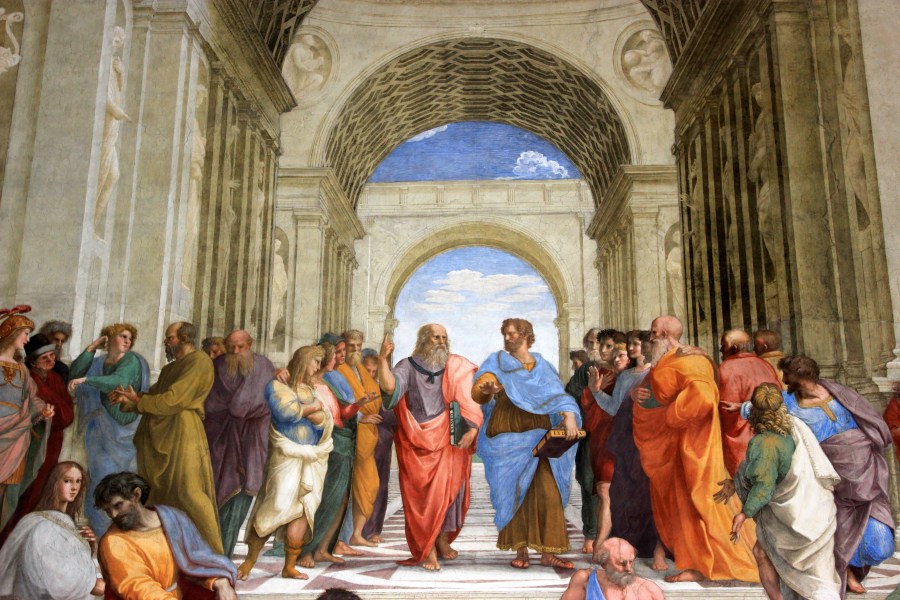
Western Civilization first emerged as an idea in Ancient Greece, enacted in the form of the Ancient Greek empire. It continued in the Roman empire, which built upon what the Greeks had started. The Greeks began the undertaking of urbanisation, and were committed to learning, much of which came to be through philosophy and the arts. The Romans essentially encapsulated what the Greeks had begun into a system of society, a system of being, which then began to expand across Europe.

Western Civilization has existed in some form or another for centuries. The philosophy that has shaped Western society, one that centralises on reason and logic within the individual, and the aesthetic, again one which is characterised by logic, dates back to the Greek and Roman empires. While these empires eventually fell, both demonstrated great strength, lasting for over 1000 years.

Typically, Western society has been defined by several key characteristics – individualism, rationalism, and democracy. While these have taken on different shapes in the various eras and nations which have formed over the centuries since its inception, Western Civilization has consistently been reliable – it has kept society in a state whereby those who exist within it are able to flourish.

It would be easy to question how this has been possible when the entire concept of individualism connotes the idea that every man is only concerned with his own being, and thus his own good, rather than the good of those around him. One could argue that in committing to his own good and working to ensure it, a man would likely also be working for the good of society – thus, the good of those around him.

But there is another key influence that has no doubt contributed to deterring the individualism characteristic of Western Civilization from becoming too self-serving. Christianity has been highly influential in giving life to the soul of Western Civilization. Christian morality is the beating heart of Western schools of ethics. Without such morality, society would have likely just descended into chaos whereby each man could justify wreaking evil against another for the sake of protecting their own individuality. 

Christianity has always played a pivotal role in the proliferation of Western Civilization. Since the inception of this form of society, this way of being, the Christian religion has been there as a guiding light, ushering it into every age. It is worth noting that after the Roman Empire fell in around 476 AD, Christianity survived and eventually re-asserted influence over the West, with many looking to the Pope as a leader. The great Saint, Pope Gregory the Great, was an indomitable leader, establishing a political influence greater than that of any emperor that swept the West. The Catholic Church became one of the great powers of influence in the Western world, exerting both social and political influence.

To provide a full historical account of Western Civilization here would be far too excessive for this article. Such a history could, and already has, filled many a book. What has been highlighted of the centrality and influence of Christianity and the Catholic Church serves to provide context as to its imperative significance in ensuring the continuity of Western Civilization. 

See, now, after centuries of being a dominant force for good, Western Civilization stands on the brink of collapse. The Western world has lost its momentum. Everything that is good, everything that has kept society functioning well for so long, has been perverted. It’s all caving in on itself. The superpowers of the Western world, those nations that were once so strong, a bulwark against the forces of evil – those who would seek to consolidate power and expand their reach beyond their own borders – have become so pathetically weak. They no longer induce fear in their opponents – they just sit there, meekly pursuing the most inane ideas, while their opponents grow stronger, preparing themselves for a takeover (which, at this point, probably won’t even be hostile). There is nothing super or powerful about them. They are nothing more than a tragic joke.

Look to the United States. Look to that once great nation that kept the forces of Communist nations at bay. That once respectable nation that was a brilliant and powerful ally. Look at them now. While China trains its military forces with rigour, the United States is more concerned with training its military forces in adhering to inclusivity, DEI regulations, and gender identity observances that have been constructed by a generation that has strayed far from Western ideals. If China invaded the US today, they would probably just come face-to-face with a bunch of soldiers who would scream at their military for ‘misgendering’ them.

The problem runs throughout the Western world. Europe, the UK, the US, Australia, New Zealand – everywhere you look in the West the same perversions of the ideas and culture that has built Western Civilization and ensured its dominance for so long have taken hold. And while it may seem we have lost touch with reality, while it may seem like there is just a lack of common sense, while it may seem that we have forgotten our roots, that we have lost touch with the core elements of the very idea of Western Civilization conceived all those centuries ago in the agoras of Ancient Greece, in the temples of Ancient Rome, there is, I think, a greater explanation at hand for the now seemingly inevitable collapse of Western Civilization, an explanation in which lies the solution for the fall.

At its roots, the disasters that have wreaked havoc on the West are not physical, but ideological. They demonstrate a clear perversion of the good, a turning away from the virtues and morals that allow individuals to flourish and thus society to thrive.

The Western world has lost touch with Christianity. And only through Christianity can it be truly revived.

We as human persons have really managed to go out of our way to ruin everything that is good, everything that makes us human. And just to preface this breakdown of the mess we have created; this does not necessarily pertain to all of humanity. There are clearly select ideologies that have perverted what has sustained the Western world for so long, and those ideologies, steeped in the minds of the men who practice and pursue them and who will seemingly defend with all their might the absurdities they have brought into existence, have wreaked disastrous consequences upon the Western world.

What is even more problematic is just how solidified these ideas have become in societal institutions – universities, the education system at large, political systems, even, to some extent, the Church – all the institutions that shape society and every human person who exists within it. The education systems are, of course, the most critical, given the ideas presented within the course of an individual’s education, a time when they are growing and vulnerable, when they are absorbing information and often taking it on as truth – which is an unfortunate reality that occurs given they do not know any better and are not mature enough to discern what is actually good on a more complex level. 

This is not to say that learning other schools of thought is an overtly bad thing. It is necessary for us to understand these ideas and ways of thinking so we can better critique them and push back against the damaging ideologies that emerge from them. But this is better done at an age whereby an individual can actually understand these ideas in their complexities and perceive the problems with them.

The impact such ideologies have is evident in the generation of students that we are presented with almost a quarter of the way through the 21st century. Students have been swept up by identity politics – they are more concerned with coddling gender preferences and ensuring people are not offended than pursuing good. We live in a world where people cannot even decide what their gender is. One day they are male, the next they have decided to switch to female, and then the next they are neither. It is a symptom of a much greater disease that has infected the Western world.

The next generation of teachers is going to be more concerned with politicising everything and indoctrinating children with dangerous ideologies than something that resembles a proper education. They do not actually care about learning and deepening their own knowledge. They just do what they must to attain the necessary qualifications to teach. 

What is more, many who are looking to teach in Catholic schools are only taking the necessary subjects for the purpose of attaining a certificate to grant them that privilege. They do not actually care about deepening their own understanding of the faith – which really should be at the heart of wanting to teach at a Catholic school. And this begins another vicious cycle in which students who are taught religious education are not provided with good teaching that will allow them to better understand and hopefully deepen their own faith, while also developing a solid understanding of Christian morality and the virtues which allow us as human persons to live a truly good life.

Instead, we will see another generation of individuals who have broken moral compasses. It is already evident in current generations who began the cycle. That is not to say that all individuals will be affected. Those who are raised well by their own families, who have the necessary upbringing to withstand the vices and wiles of the education system and the wolves that lie waiting within, will no doubt be the only hope for the Western world.

The true problem, then, lies not merely in the systems and institutions themselves, but in the people that operate within them. And at the heart of it all is the battle that rages within each one of us, right within our beating hearts, between good and evil. It is a battle that has been taking place since the very beginning of human existence. From the Christian perspective, it has been raging on even before this, since the creation of the angels and the rebellion that took place in the Heavens following the revelation to the angels of the plan for humanity. Ever since Lucifer and the angels who rebelled with him were defeated by the Archangel Michael and his battalion and cast out of Heaven, the devil has been working in every way he can to bring as many souls as he can into the perpetual, never-ending misery of Hell. 

This is why, from the very first moment human persons were created, the devil was scheming to draw them away from God. We know from the Fall of humanity that he was successful in doing that – at least, momentarily. For while humanity was in its nature fallen, it has now been redeemed. But while Christ may have redeemed our fallen nature, that concupiscence and the battle against temptation has not just magically evaporated. Each one of us still must choose between good and evil in all that we do, in every decision we make.

The devil is waiting for us to fall every single moment of every single day. He has his eyes on every single one of us. Each day, he presents us with suggestions, temptations, to draw us away from God. And while we may be able to resist such temptations, we are not perfect. There are times where we fall. It is part of who we are as human persons. The difference is that, for those of us who actually understand this spiritual element to the world, we understand the necessity to seek forgiveness for the wrong we have done, for the sins we have committed. 

This is unfortunately not the case for all those who do not believe. Instead, they continue to allow the evil to consume them – to the point that they begin to promote evil ideas and bring others into their sin. This effect is what has contributed largely to the approaching collapse of Western Civilization. 

People no longer respect the human body. They are consumed by vices. They have no respect for human life. They use each other. And they just support whatever will aid in their own personal gain. They want the individualism but none of the morality that prevents it from becoming so self-serving.

Technology, an innovation that was likely created to aid the human race in many different ways, has become a means by which humanity is being erased. It has become a portal by which individuals can access toxic and inhumane ideas and ideologies online, by which people can become radicalised. The web is so open and social media platforms are so poorly regulated that harmful things like pornography and what is termed ‘soft porn’ are now blatantly visible in so many places online. It’s horrifying to think that these kinds of things are accessible to anyone, but that horror is compounded when we consider that nowadays some parents will just thrust an iPad or their phone into their child’s hands to keep them quiet and happy. But that won’t bring the child true happiness, because it is simply a means to an end. It will only instil a dependency on technology in the child; they will become so absorbed by it that they will never truly appreciate the world around them. They will never appreciate the beauty of God’s creation. They will never be able to just live in the moment and appreciate the little things, things like being with people, enjoying their company. Instead, their faces will be glued to their screens. 

This is the problem with technology. It dehumanises us. It is marketed as something that can keep us connected – and yet, ironically, it disconnects us from reality. It distracts us from the people around us. It is marketed as something that is supposed to improve efficiency and productivity – and yet again, ironically, it gets in the way of these very qualities. We become so consumed by useless interactions online (think of all those arguments people have on social media platforms) and scroll so much that we end up wasting hours of our time that could have been invested in things of far greater importance, or at least something that would have been of greater benefit. We could be consolidating knowledge, honing a skill, writing a masterpiece, or even building friendships and relationships. Instead of appreciating the beauty of life, we lose ourselves to a screen.

The pornography issue highlights another catastrophe – people are so out-of-touch with morality that they will sexualise others or allow themselves to be sexualised for personal gain. They are selling themselves. They have allowed themselves to become a commodity. And this is one of the root issues of the impending collapse – the commodification of the human person. Humans are no longer viewed as people. They are viewed as objects, commodities, clients, part of a market, nothing more than a collective which must be sold to or dealt with in some way. We are all just cogs in a machine.

Western Civilization may be on the brink of collapse. But there is a chance we can prevent this from occurring if we return to the Christian roots of the West and the ways of thinking that established a way of being that has transcended centuries. At the heart of this lies a return to the morals and virtues that lend themselves to creating a society in which everyone is seen as a human person with innate dignity, where individuals can flourish and thrive without impinging on the dignity of another person.

But this is going to take work. It is not going to be an easy venture. It will take great strength, great perseverance. It is clear that, as it stands, individuals in the Western world have become so radicalised by certain harmful ideologies and so disconnected from Christian virtues and morality. They have created for themselves false and deceitful idols out of celebrities and technology. They continue to persist in this idolatry. And they all think that what they are doing, the ideas they are promoting – ideas that are directly opposed to morality, to virtue, and to good itself – are good.

To be quite blunt, while the solution to the collapse of Western Civilization is a revival of Christianity, this may not come to pass in time to save the West. The collapse may very well take place before this can be achieved.

And so, this brings us back to the question at hand – what happens if Western Civilization falls?

It is a question to which the answer is not completely certain, but to which likely answers can be posited. 

Several authors have explored through literature the possibilities of a world that appears to be devoid of Western ideals. Orwell’s 1984 highlighted what might occur if a society became entirely collectivist, whereby one would have to lose their own individualism in order to gain some perverse sense of ‘freedom.’ In such a place, no-one is able to truly think for themselves, to possess a free thought. A world in which everyone thinks the same, in which every individual is just part of a collective machine, is not at all ideal.

In a similar yet somewhat alternative vein, Huxley’s Brave New World presents a future in which the world has become so consumed by technology that it practically governs how people live. Although, in such a world, people are not really people. They have become so devoid of humanity to the point that they no longer have to experience certain emotions and feelings, nor the ups and downs of human life, but can simply escape from any problems through the confected ‘pleasures’ of technology.

While both of these worlds are works of fiction, they each possess ideas and ways of being that are not too far-fetched. Neither are worlds any reasonable human person would want to inhabit.

What is more likely, however, is that, if the collapse of Western Civilization does come to pass, another dominant power will step in and take over, consolidating even greater power than they already possess. Their philosophy, their way of thinking, however wrong, inhumane, or even catastrophic it may be, will become the common, acceptable way of thinking. Other beliefs may even be outlawed.

There is no guarantee that this can be prevented – at least, not with the shape the Western world is currently in. But there is one final method that can be proposed. Christianity is a certain antidote to the disease ravaging eating away at the heart of Western Civilization. The issue at hand is one of time – something that seems to constantly be running out. The revival of Christianity in the West is going to take time. And so, it is imperative to find a way of buying time. The solution to this may just lie in the very concept that was just presented as a method of creating a subservient, inhuman society – empire building.

Such empire building could take place across the Western world, most prominently in the United States. In fact, such a method, if undertaken well with the right values and philosophy at heart, could revive the US as a global superpower. There is, of course, some risk in that, if the controlling power was to possess harmful ideas or a dangerous ideology, or if they were to become corrupted in some way, this could have a flow on effect to the empire at large. But, if it were to occur in a manner that led to the revival of the values that lie at the very heart of Western Civilization itself, it could be the very thing that forestalls its collapse.

Just as Western Civilization was conceived in an age of empires, it may be renewed in the same.